
When it comes to maintaining your wood deck, you often find yourself at a crossroads: should you replace or stain your deck? This decision affects not only the aesthetic appeal of your outdoor space but also its safety, long-term durability, and maintenance requirements.
In this article, we’ll delve into the pros and cons of each approach, incorporate real project comparisons from Minneapolis and St. Paul, and outline warranty differences to help you make the best decision for your home.
Evaluating Your Deck’s Condition
Signs of Wear and Damage
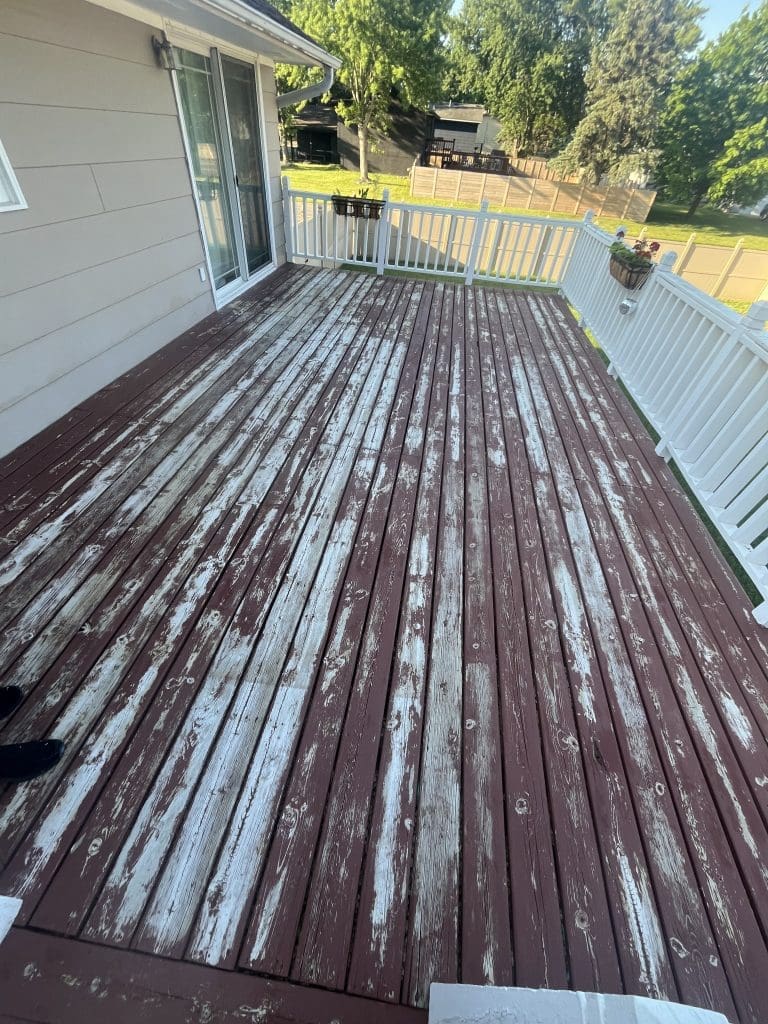
To decide between staining or replacement, first assess your deck’s condition:
- Flexing deck boards indicate structural weakness.
- Loose or missing boards, cracked or split wood, and rotting posts all suggest damage.
- Wobbly railings, insect damage, or an uneven slope also warrant closer inspection.
Lifespan of Materials
- Well-maintained wood decks can last 15–20 years.
- Regular staining and sealing extend longevity.
- Neglected decks may require early replacement.
Pros and Cons of Deck Staining
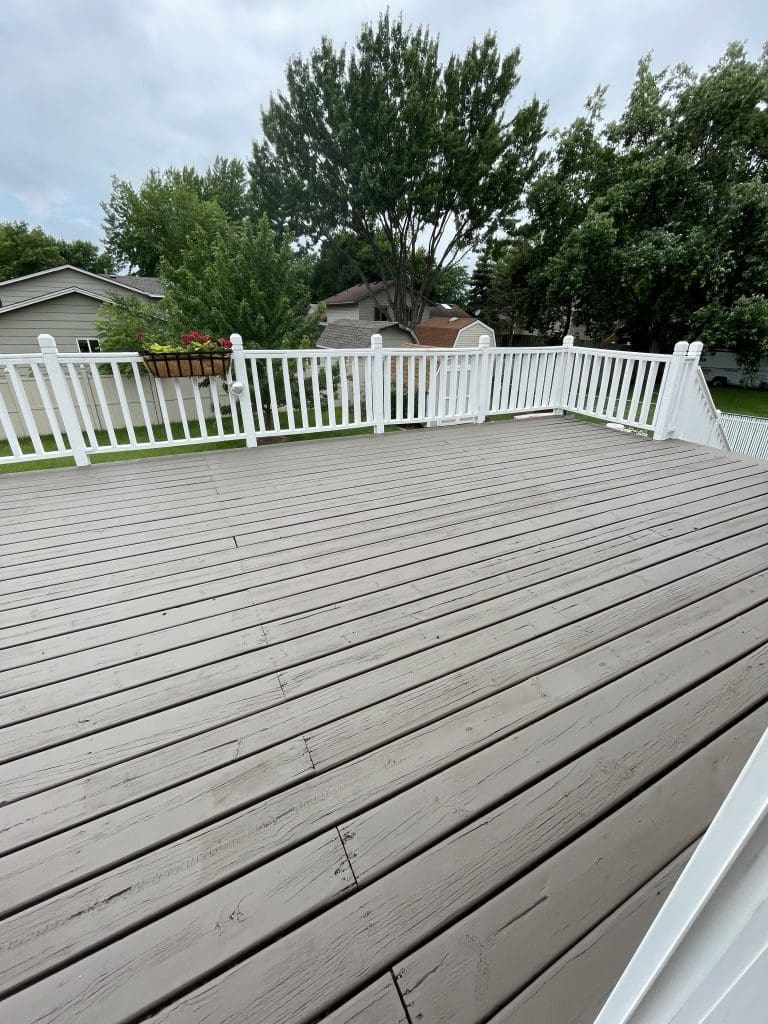
Real Project Example: St. Paul, MN 55105
- Project Type: Deck Staining + Backwall
- Total Cost: $3,300
- Total Cost Excluding Backwall: $2,800
- Longevity: Requires restaining every 2–3 years
Cost-Effectiveness
Staining is less expensive upfront. National averages range from $850–$1,465 depending on deck size and stain type.
Visual Appeal
Stains come in transparent to solid finishes, allowing you to either showcase the wood grain or give it a bold new look.
Maintenance
Stains protect from UV and moisture but must be reapplied periodically. There’s no warranty on staining horizontal surfaces (deck boards, stairs), though vertical surfaces (pillars, beams) may carry a 3-year warranty.
Pros and Cons of Deck Replacement
Real Project Example: Minneapolis, MN 55410
- Project Type: Full Deck Replacement
- Total Cost: $10,000
- Longevity: Maintenance-free for years
- Warranties: 2-year craftsmanship warranty + 10-year structural warranty
Long-Term Investment
Though more expensive, replacement offers:
- Increased home value (up to 44% ROI)
- Long-lasting materials (composite decks last 25–50 years)
Customization
Replace your deck to add modern features like built-in seating or upgraded railings, or switch to maintenance-free materials.
Disruption
Expect a longer timeline and higher labor costs for full replacement, typically 2–4 weeks depending on deck size and complexity.
Real Project Comparisons and Takeaways
| Location | Type | Cost | Maintenance Cycle | Warranty Coverage |
| St. Paul 55105 | Staining | $2,800 | Every 2–3 years | 3-year warranty on vertical surfaces only |
| Minneapolis 55410 | Full Replacement | $10,000 | Low maintenance | 2-year craftsmanship + 10-year structural |
Decision-Making Considerations
- Extent of Damage: Minor wear = stain; major damage = replace
- Budget: Staining is cheaper short-term; replacement is better for longevity
- Goals: Want a new look? Stain. Want new features? Replace.
- Maintenance Tolerance: Staining = ongoing; Composite replacement = minimal
Conclusion
Both staining and replacing offer benefits—your decision should hinge on your deck’s current condition, your budget, and your long-term goals. If you want a budget-friendly refresh and your deck is structurally sound, staining is a great choice. If you want long-term durability and reduced maintenance, replacement pays off.
Use the examples from real projects in Minneapolis and St. Paul to guide your expectations. Not sure what’s right for your deck? Get in touch for a free estimate and personalized consultation.
FAQ
How often should I re-stain my deck? Every 2–3 years, depending on sun exposure and moisture.
Can I stain a brand-new deck right away? No. Wait 3–12 months to allow the wood to dry and weather properly.
What’s the difference between transparent, semi-transparent, and solid stains?
- Transparent: Minimal color, shows wood grain, short lifespan (1–2 years)
- Semi-transparent: Shows some grain, lasts 3–4 years
- Solid: Full color coverage, longest protection, may peel over time
How does painting compare to staining? Paint lasts longer (up to 10 years), but stain allows wood to breathe and is easier to touch up.
What warranties come with staining vs. replacement?
- Staining: 3-year limited warranty on vertical surfaces only
- Replacement: 2-year craftsmanship + 10-year structural warranty